Point-to-Point and Paying for It: Quantifying the True Financial Burden of Fragmented Enterprise Integration
Every enterprise integration problem begins as a pragmatic solution. A sales team needs customer data from the CRM in the ERP. A data analyst needs order history from the commerce platform in the reporting warehouse. An operations team needs inventory signals from the fulfillment system in the customer service tool. The fastest path between any two of those points is a direct connection — and so one is built.
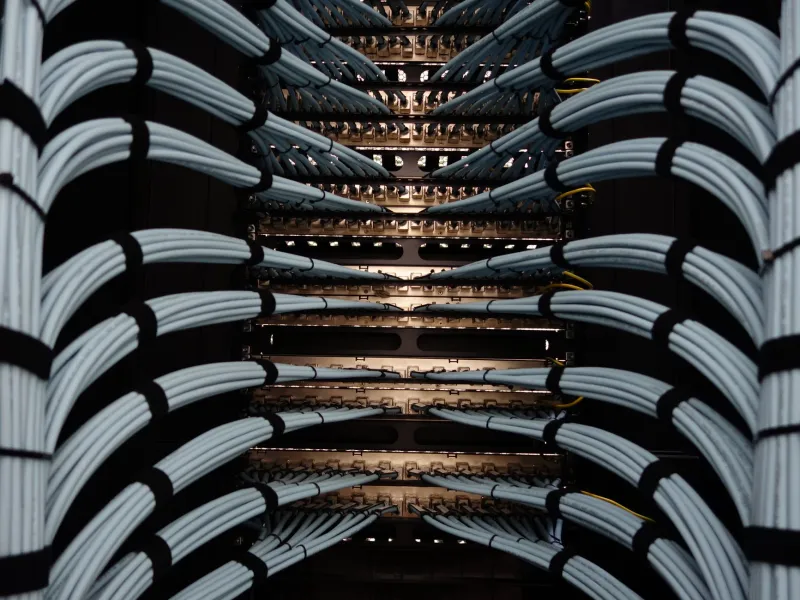
Then another. And another. Over years of organic growth, acquisitions, and departmental tool proliferation, the enterprise ends up with an integration architecture that looks less like a system and more like a wiring diagram drawn by committee over a decade. Every connection was justified at the time it was created. Collectively, they represent a financial liability that most organizations have never fully measured.
This article attempts to do that measurement — to move the conversation about integration fragmentation from the abstract to the concrete, and to provide enterprise leaders with a framework for understanding what their current integration posture is actually costing them.
Where the Hidden Costs Actually Live
The direct cost of maintaining point-to-point integrations is rarely captured in a single budget category. Instead, it is distributed across labor, infrastructure, compliance, and opportunity cost in ways that make it invisible to any single stakeholder. Understanding the full picture requires looking across all of these dimensions simultaneously.
Integration Maintenance Labor
Every custom integration requires ongoing maintenance. APIs change. Data schemas evolve. Vendor platforms release updates that break existing connections. In a mature enterprise environment with dozens or hundreds of point-to-point integrations, the engineering labor required to keep those connections operational represents a significant and growing expense.
Conservative estimates from enterprise IT environments suggest that a single complex point-to-point integration requires between forty and eighty hours of maintenance labor per year under normal conditions. Multiply that across a portfolio of one hundred integrations — not an unusual number for a mid-to-large enterprise — and the annual maintenance burden approaches the equivalent of two to four full-time engineering positions, consumed entirely by keeping existing connections alive rather than building new capability.
Manual Data Reconciliation
When integrations are fragile or incomplete, data gaps are filled by people. Business analysts extract reports from one system, manually reconcile them against data from another, and produce the synthesized view that the organization needs to make decisions. This process is expensive, slow, and error-prone.
The labor cost of manual reconciliation is often absorbed into the general overhead of business operations teams rather than attributed to the integration architecture that necessitates it. A finance team that spends fifteen hours per week reconciling revenue figures across three systems is not usually identified as an integration problem — it is simply how finance works. That invisibility is precisely what allows the cost to persist.
Compliance and Audit Exposure
Fragmented data ecosystems create compliance risks that carry their own financial consequences. When customer data moves through a network of point-to-point integrations rather than a governed integration platform, the ability to answer basic regulatory questions — where does this data live, who has accessed it, and when was it last modified — becomes genuinely difficult.
For enterprises operating under HIPAA, SOX, CCPA, or sector-specific regulatory frameworks, the inability to provide clean data lineage is not merely an audit inconvenience. It is a material risk exposure. The cost of a regulatory finding or a data breach attributable to integration gaps can dwarf the cost of the integration modernization that would have prevented it.
Opportunity Cost: The Decisions That Never Get Made
Perhaps the most significant cost of integration fragmentation is the one that is hardest to quantify: the business decisions that are delayed, degraded, or never made because the data required to support them cannot be assembled reliably.
An enterprise that cannot produce a unified view of customer behavior across its commerce, service, and marketing systems is not merely experiencing a technical inconvenience. It is operating with a structurally limited capacity for strategic insight. The competitive cost of that limitation — slower response to market signals, less precise customer segmentation, reduced ability to model financial scenarios — compounds over time in ways that are real even when they resist precise measurement.
Building the Financial Case for Integration Modernization
For enterprise leaders considering an investment in a modern integration platform — whether an iPaaS solution, an enterprise service bus, or an event-driven architecture — the financial case must be built on specifics rather than generalities. The following framework provides a starting structure.
Step 1: Inventory and categorize existing integrations. Document every known point-to-point connection in the enterprise, categorized by criticality, maintenance frequency, and the systems it connects. This inventory is the foundation of all subsequent analysis.
Step 2: Quantify current maintenance labor. Work with engineering team leads to estimate the annual maintenance hours attributable to each integration category. Apply loaded labor costs to produce a total annual maintenance expense figure.
Step 3: Estimate reconciliation labor. Survey business operations teams to identify manual data reconciliation activities and their time requirements. Translate these into annual labor costs using appropriate burdened rates for the roles involved.
Step 4: Assess compliance risk exposure. Work with legal and compliance teams to identify regulatory frameworks that apply to data flowing through the integration landscape. Estimate the potential financial exposure associated with a compliance finding or breach event, weighted by the probability that current integration practices would contribute to such an event.
Step 5: Model the modernization investment. Obtain implementation and licensing cost estimates for the integration platform under consideration. Build a multi-year total cost of ownership model that includes implementation, licensing, training, and ongoing platform management.
Step 6: Compare the scenarios. A well-constructed analysis will typically show that the status quo carries a higher five-year cost than a modernization investment, even before accounting for the opportunity cost of improved data access. The challenge is making that comparison visible to stakeholders who currently see only the implementation cost of the new platform, not the ongoing cost of the fragmented architecture it would replace.
The Investment That Pays for Itself
Modern integration platforms are not inexpensive, and their implementation is not trivial. Organizations that approach integration modernization without a clear financial framework often find that the initiative stalls at the budget approval stage — not because the investment is unjustifiable, but because the case has been made in technical terms rather than financial ones.
The discipline of quantifying what the current architecture actually costs — in labor, in compliance exposure, in decision quality — is what transforms an integration modernization initiative from a technology project into a business investment. And it is an investment that, when properly scoped and executed, consistently delivers returns that extend well beyond the initial efficiency gains.
The question enterprise leaders should be asking is not whether they can afford to modernize their integration architecture. It is whether they can afford to continue paying the integration tax that their current architecture imposes — quarter after quarter, without appearing on any single line of the budget.